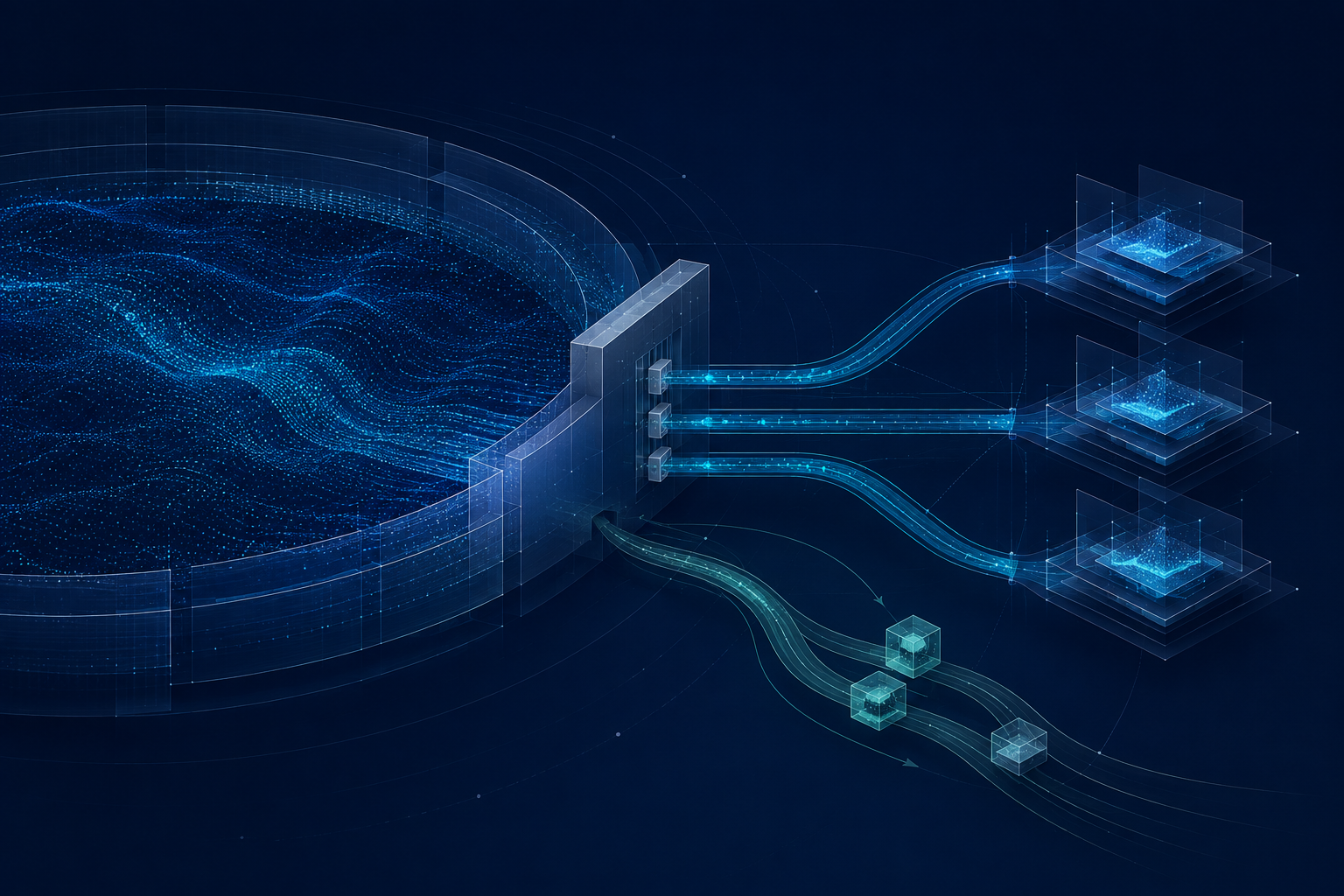
Britain enters a controlled-access system
On 24 August, President Volodymyr Zelenskyy and Prime Minister Andy Burnham signed an artificial-intelligence defence partnership that made Britain the first international partner with access to Ukraine's Avengers Labs. The platform contains annotated imagery collected during Ukraine's defence against Russia's invasion. For Kyiv, the agreement creates a practical test: can a battlefield dataset become bargaining power with an ally without Ukraine losing control of the value later built from it?
The announcement points to controlled access rather than an open transfer. Ukraine's Defence Ministry had already placed domestic users under licensing agreements and screening rules that exclude companies connected to Russia, sanctioned entities and businesses operating in occupied territory. The public releases reviewed for this article do not disclose the bilateral contract, so they cannot show whether comparable safeguards govern every British participant. They also give no reason to assume those safeguards are absent.
Key takeaways
- Ukraine already uses licensing and screening for domestic companies, while Britain now has partnership access. The public releases do not show whether identical terms govern British participants.
- The partnership will strengthen Ukraine's leverage only if British research and commercial work produces capabilities that return to Ukrainian users on usable terms.
- Public evidence on derivative rights, auditing, onward sharing and Ukrainian deliverables would allow outsiders to judge the exchange without requiring disclosure of sensitive battlefield data.
What Britain receives
Avengers Labs is valuable because it is drawn from current operations rather than a laboratory simulation. Ukraine's Defence Ministry describes a dataset of five million annotated frames, mostly collected through the DELTA combat system. The Ministry says an automated model trained on this material processes more than 100,000 drone video streams each month and identifies 70 per cent of enemy targets in real time. That performance figure is an official claim and has not been independently validated in the sources reviewed.
Britain plans to connect the data with its universities, researchers and defence companies. The first projects include an AI-enabled fibre-optic sensor trial at a British defence site and research into low-power chips for drones, robotics and autonomous systems. These projects are specific enough to track, but neither has yet demonstrated an operational benefit for Ukraine.
What Ukraine can gain
For British researchers, the attraction is not merely the dataset's size. The images have already been annotated for machine learning and originate mainly from the DELTA combat system. Ukraine's Defence Ministry says comparable private military datasets are difficult to construct. The UK agreement now opens the platform to specialist British researchers and manufacturers, but the public releases do not show whether every British participant enters under the domestic rules.
That exchange becomes durable leverage only when the return is concrete. A British model that improves because it learned from Ukrainian data has strategic value beyond the initial pilot. Ukraine's position is stronger if it receives usable access to that model, a production licence, deployable hardware or another defined capability. A general promise of cooperation is not enough to measure reciprocity.
“The useful test is whether Ukrainian forces receive models or products trained with Ukrainian data under terms Kyiv can audit and revoke.”
What the announcement does not show
The public releases reviewed for this article do not specify who owns models trained on Avengers Labs, whether participants may share derivative products, how long they may retain data or what permits Ukraine to suspend access. These omissions limit external assessment. They do not prove that the agreement lacks protections, since some rules may remain confidential for commercial or security reasons.
Technical results also matter as much as contract design. University College London's Steven Murdoch told the Guardian that it was unclear whether Ukrainian data would improve the fibre-optic detection pilot, although he saw plausible value in data about newer threats such as drones. A well-governed partnership can still produce a weak system. Conversely, an effective British trial would not by itself show that Ukraine received a fair return.
The evidence that would settle it
Several non-sensitive disclosures would make the arrangement easier to judge. Ukraine could publish general rules for ownership of derivative models, onward sharing, audits and revocation without exposing the underlying dataset. The partners could also identify a Ukrainian pilot, report independent performance tests and state whether Ukrainian institutions receive the resulting software, hardware or production rights.
Controlled British access therefore gives Ukraine a credible route to technological leverage, but the signing alone does not establish that the leverage will endure. The answer depends on whether Ukrainian data produces capabilities that return to Ukrainian forces and remain subject to Ukrainian control. Evidence of a Ukrainian deployment, reciprocal model access and enforceable audit or revocation rules would strengthen that judgment. If the pilots benefit only British sites or derivative products circulate beyond Ukraine's control, the judgment would move in the opposite direction.
Share this analysis

Mara Ionescu
Research ContributorInformation resilience, foreign influence narratives, and regional security in Romania, Ukraine, and the Republic of Moldova.
View contributor profile →